
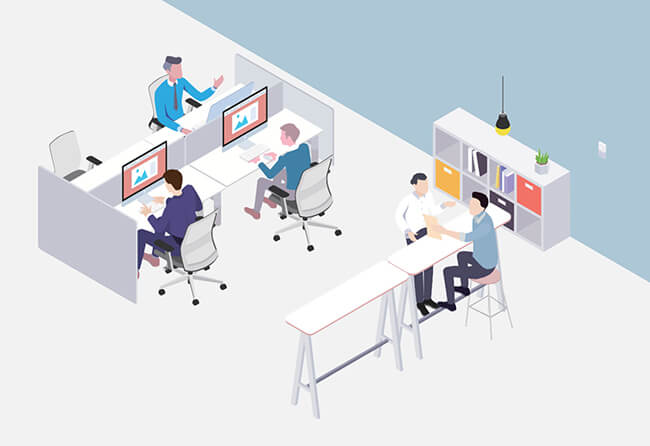
Collaboration Mode—Impromptu Exchange (Small Huddle Bar)
Needs:
- Discuss issues with colleagues anytime
- Easily switch between sitting and standing to shift thinking modes
- Avoid disturbing others at workstations
Features:
Ideal for quick, non-confidential discussions among 2–5 people
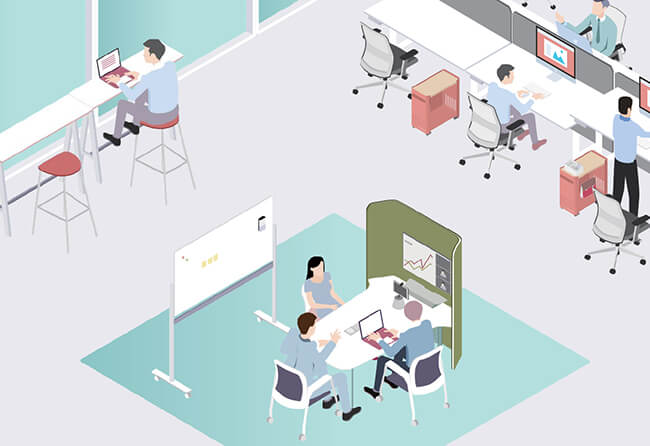
Collaboration Mode—Impromptu Exchange (Semi-Open Collaboration Zone)
Needs:
- Quickly connect with colleagues to address issues during work
- Switch postures freely to shift mindset
- Avoid the hassle of booking meeting rooms and waiting
Features:
Suitable for spontaneous discussions among 2–4 people
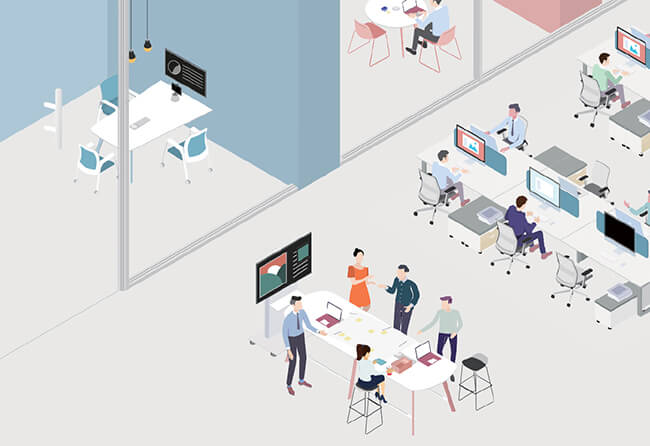
Collaboration Mode—Impromptu Exchange (Open Collaboration Area)
Needs:
- A common space where different departments can meet for stand-up sessions
- Allow participants to move around to encourage thinking
- Mobile equipment support for on-the-spot projection
Features:
Suitable for fast departmental discussions among 4–8 people; highly mobile in nature
View Real-world Application
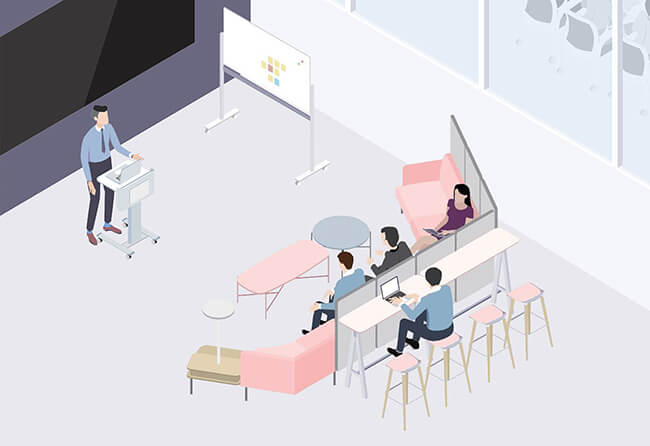
Collaboration Mode—Informal Meeting (Semi-Open Collaboration Space)
Needs:
- Support creative and R&D team interactions
- Reporting or presentations supported by AV and projection equipment
- A semi-open, energetic environment for training and sharing
Features:
Ideal for informal meetings and internal training sessions (4–8 people)
View Real-world Application
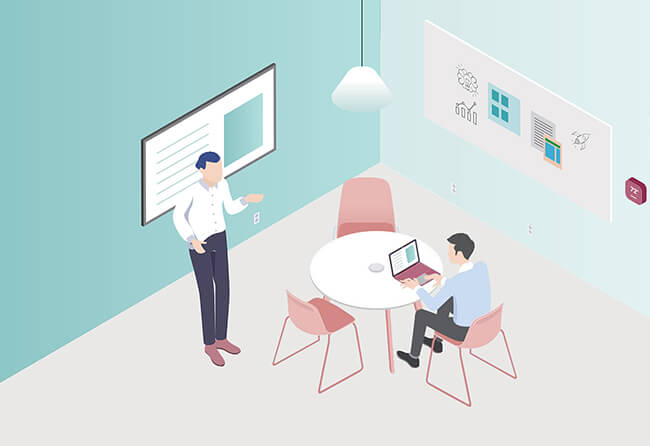
Collaboration Mode—Formal Meeting (Small Meeting Room)
Needs:
- Avoid complicated meeting room reservations and waiting
- Prevent awkwardness and crowding at workstation areas
- Break away from traditional rigid meeting room formality
Features:
Suitable for short discussions or brainstorming among 2–3 people
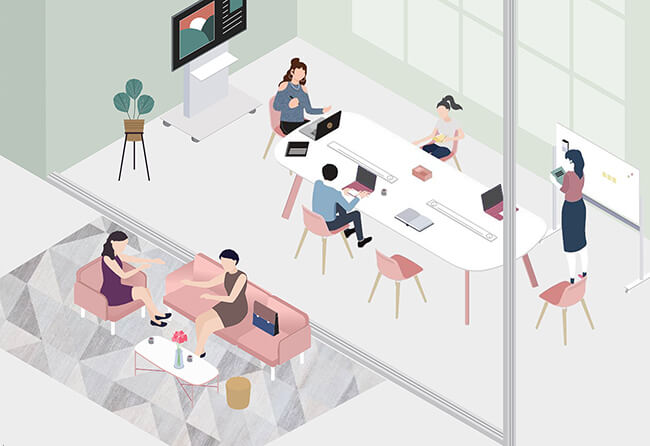
Collaboration Mode—Formal Meeting (Small-to-Medium Meeting Room)
Needs:
- Provide space for 2–5 people without wasting space
- Stable internet, video, and audio transmission
- Prevent discussions at workstations from disturbing others
Features:
Suitable for confidential discussions and small video conferences (2–5 people)
View Real-world Application
Collaboration Mode—Formal Meeting (Medium Meeting Room)
Needs:
- A more formal environment for HR, managers, or visitors
- Smart support with screens, power, and network for smooth proceedings
- Storage for snacks and water for guests
Features:
Ideal for departments that frequently interact with clients
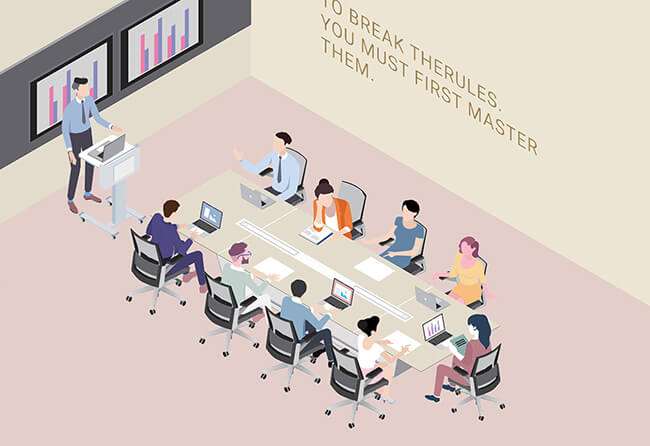
Collaboration Mode—Formal Meeting (Large Meeting Room)
Needs:
- Support company-wide large meetings, with scheduling and booking
- Reporting or presentations with AV and recording equipment
- Encourage interaction even though meetings occur less frequently
Features:
Suitable for company meetings, formal presentations, and project reporting (10+ people)
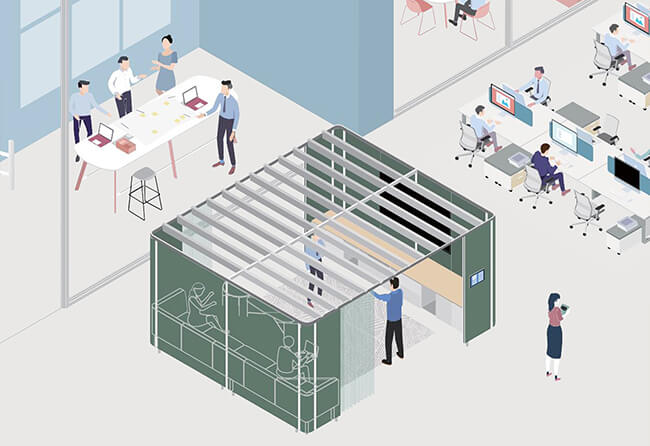
Collaboration Mode—Informal Meeting (Medium Collaboration Room)
Needs:
- Minimalist design, reconfigurable to match organizational changes
- Provide movement space for participants, facilitating thinking
- Smart equipment support for booking, projection, and atmosphere control
Features:
Suitable for daily departmental meetings and learning sessions; ideal for agile teams
View Real-world Application
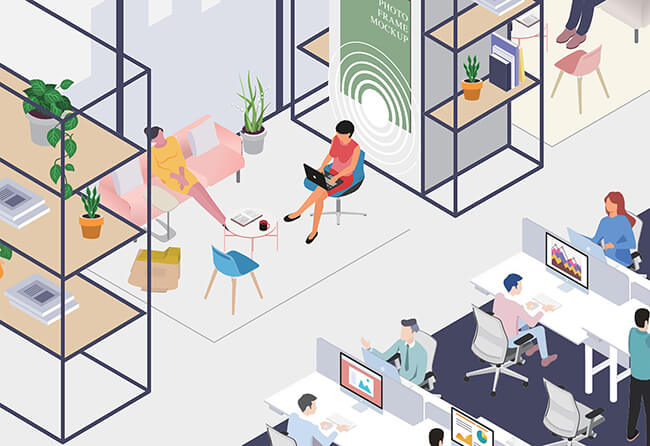
Collaboration Mode—Impromptu Exchange (Workstation Adjacent Collaboration Area)
Needs:
- Support transitions between focus, collaboration, and rest
- Alleviate mental fatigue and insufficient rest at workstations
- Encourage micro-breaks, reading, or quick reboot moments
Features:
Creates a relaxed atmosphere, allowing light work and easy state adjustment
View Real-world Application
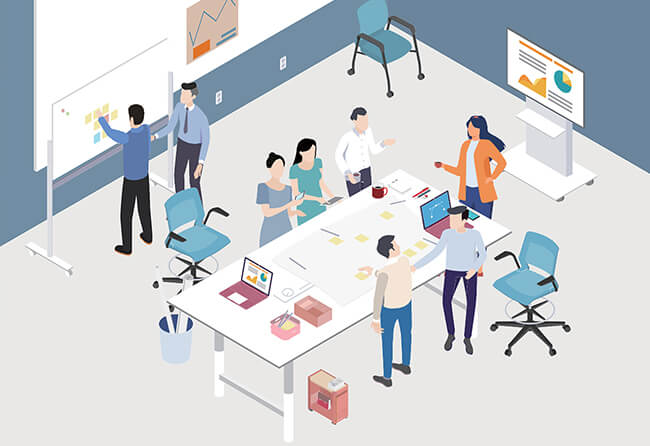
Project Co-Creation—Project Room
Needs:
- Provide whiteboards or walls for long-term project material display
- Storage solutions to keep the workspace tidy
- Support frequent interaction and ensure team alignment
Features:
Ideal for intensive or urgent project work, supporting close collaboration among project members
View Real-world Application
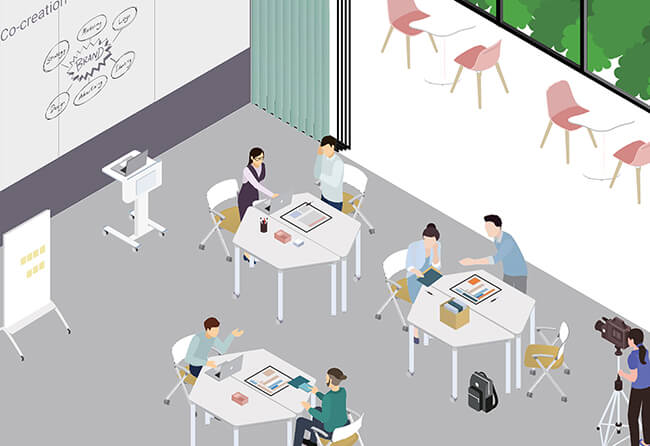
Brainstorming—Ideation Space
Needs:
- Quickly access an informal discussion environment to encourage idea sharing
- Capture ideas instantly and display them for the group
- Flexible layout for easy adjustment and storage
Features:
Supports open discussion, co-creation, and cross-department workshops
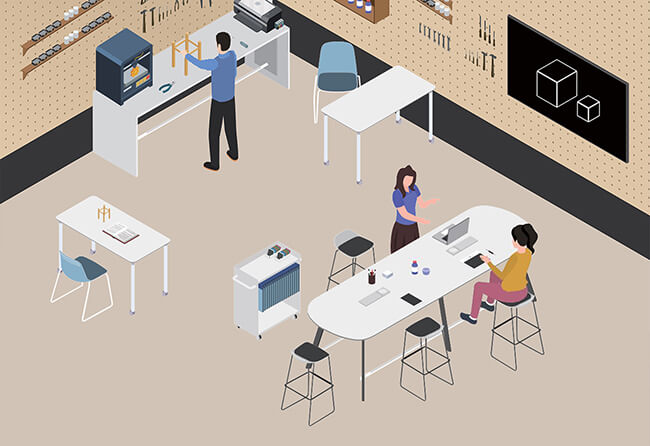
Prototyping—Prototype Lab
Needs:
- Tools, storage, and work surfaces for prototype building
- Space to move freely, supporting thinking and iteration
- High flexibility with large tables and video equipment
Features:
Ideal for product prototyping and iterative testing in a dedicated enclosed setting