※ Table of Contents
- Experience Revolution | From Efficiency Spaces to Hospitality Workplaces: How Can the Office Become a Destination "Worth Visiting" for Employees?
- Scenario Dispatch | Breaking the Seating Framework: Work Scenario Planning Combining Technology, Acoustics, and Sensory Design
- Sustainability Specifications | Modularity and Life Cycle Assessment: How Office Furniture Enters Substantive ESG Procurement Metrics
- Trend Transformation | AURORA Furniture and AID: Assisting Enterprises in Demonstrating High-Value Capability Sites
Held annually in Chicago, NeoCon is not merely a showcase for new products in the commercial furniture and interior space design industries; it is a window for observing global workspace transformations. It enables designers, architects, business owners, and brand managers to see how work modes are being redefined, and how furniture, materials, lighting, acoustics, and technology collectively construct next-generation work environments.
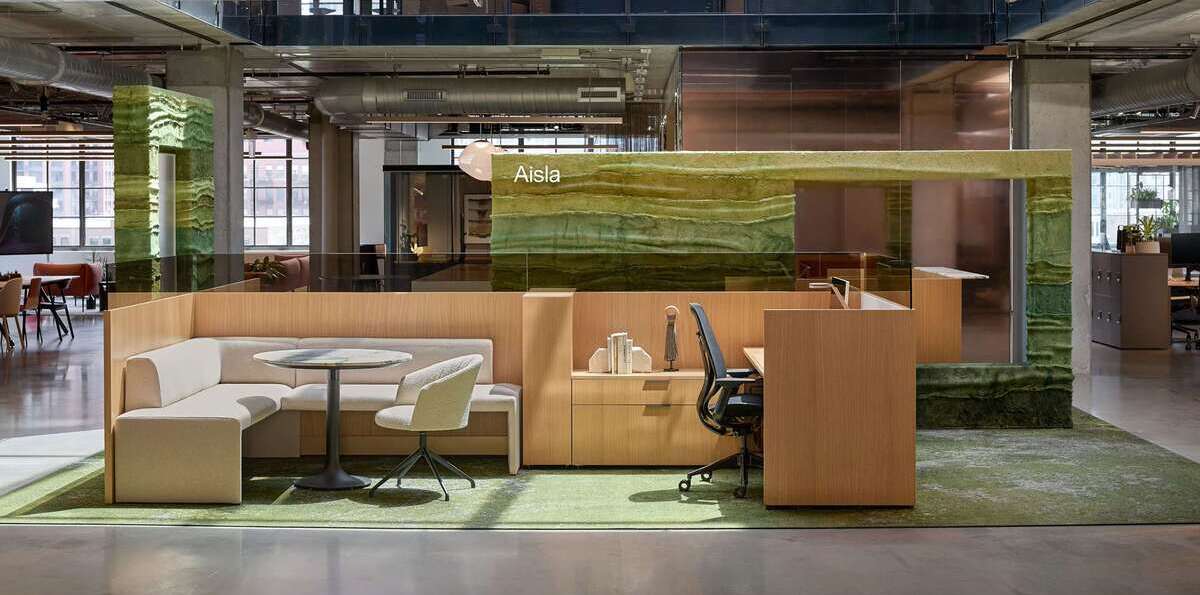 As seen from NeoCon 2026, workspaces are no longer just furniture displays, but corporate spaces integrating work modes, brand experiences, tech applications, and human-centric design. (Image Source: Steelcase Fulton Market Design Days)
Centering on the theme "Where Design Connects," NeoCon 2026 attracted approximately 55,000 global visits, bringing together 450 brands and professionals from 88 countries. This clearly demonstrates that workspace design has become the core of corporate strategy. As hybrid work becomes normalized, enterprises face pressures in talent retention, and ESG procurement moves toward concrete specifications, the office is no longer just a place to arrange desks and chairs, layout seats, and control floor efficiency. It has become a concrete spatial arena for how enterprises organize work, present brands, support employee states, and address future changes.
From Efficiency Spaces to Experience Grounds: Making Employees Glad to Visit
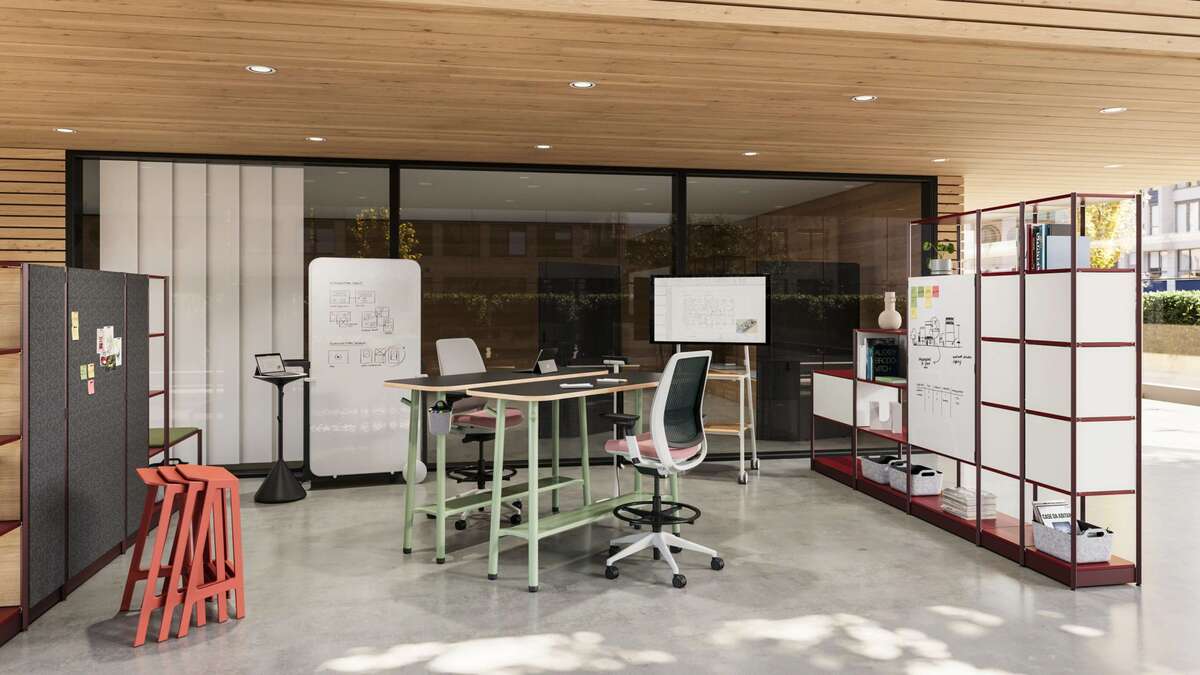 The future office will no longer focus on fixed seating, but configure rapidly convertible scenarios according to diverse work needs such as focus, collaboration, discussion, and interaction. (Image Source: Steelcase Flex Collection)
One of the most distinct signals from NeoCon 2026 is that the office is moving from a purely efficiency-oriented space to an experience-oriented work arena that places greater emphasis on dwelling, interaction, and physical-mental states. The "experience" mentioned here does not mean styling the office like a hotel, nor replacing functionality with decoration. Rather, it means rethinking humans' complete behaviors in the office: How to enter a flow state? How to connect with others? How to switch between different tasks? And how to maintain stability amidst high-density information and collaboration?
Therefore, the rise of the Hospitality Workplace warrants close attention. Reception areas, coffee stations, shared long tables, lounges, informal discussion zones, and brand exhibition scenarios are transforming from ancillary office setups into critical nodes shaping corporate culture and interpersonal connections. When employees no longer come to the office fixedly every day, and enterprises wish for people to return on-site, they cannot rely solely on institutional requirements. The office must offer value that working from home cannot replace: including superior collaboration efficiency, clearer team connections, higher-quality meeting experiences, and a more tangible brand culture.
This also means that the value of future offices will no longer depend merely on how many people they can accommodate, but on whether people entering the space can more naturally accomplish work, exchange ideas, and make decisions. A good office does not just give employees "a place to sit," but makes people willing to show up and truly feel an upgrade in work quality after arriving on-site.
From Seating Configuration to Scenario Configuration: Responding to Diverse Work Needs
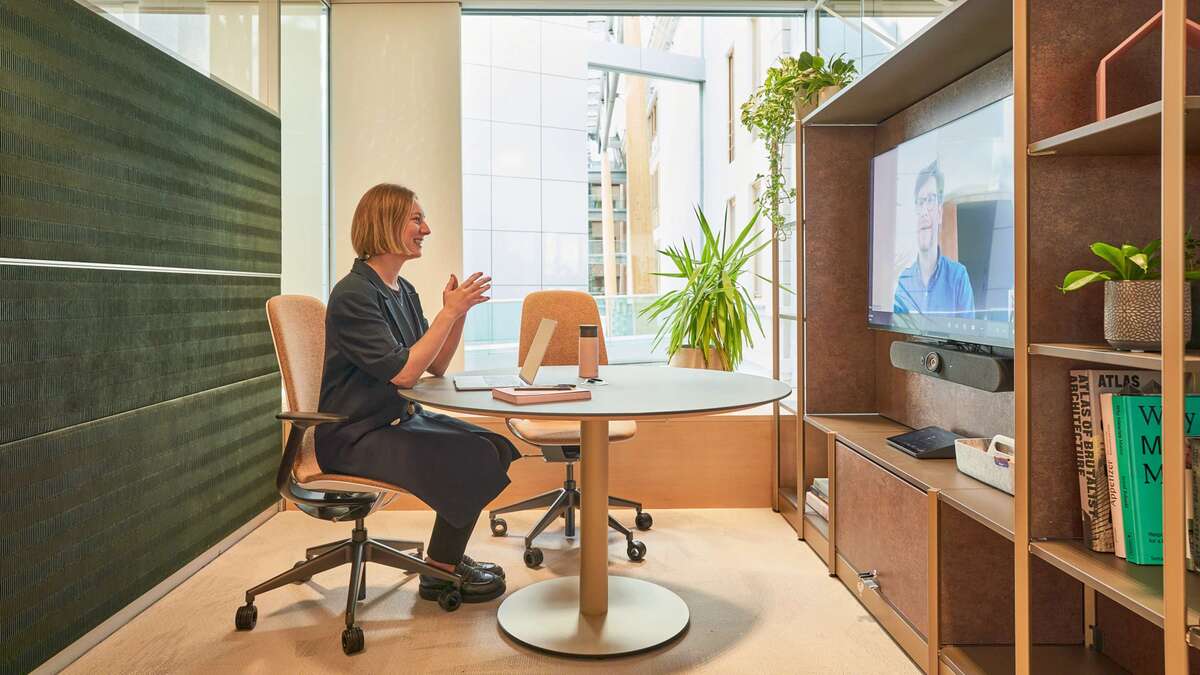 Hybrid work makes meeting space design place greater emphasis on equitable participation. Furniture, screens, cameras, and acoustic conditions must jointly support communication quality for both on-site and remote members. (Image Source: Steelcase Munich LINC Case Study)
Workspace planning in 2026 is shifting from "seating-oriented" to "activity-oriented." In the past, enterprises often used departments, headcount, and job tiers as the primary basis for spatial allocation; in the future, offices will need to take work behaviors as the starting point. Within a single day, the same employee may require deep focus, real-time video calls, cross-departmental discussions, swift decision-making, brief solitude, and social recovery. If all tasks are forced to occur at the same desk, under the same acoustic conditions, and within the same spatial atmosphere, both efficiency and experience will be constrained.
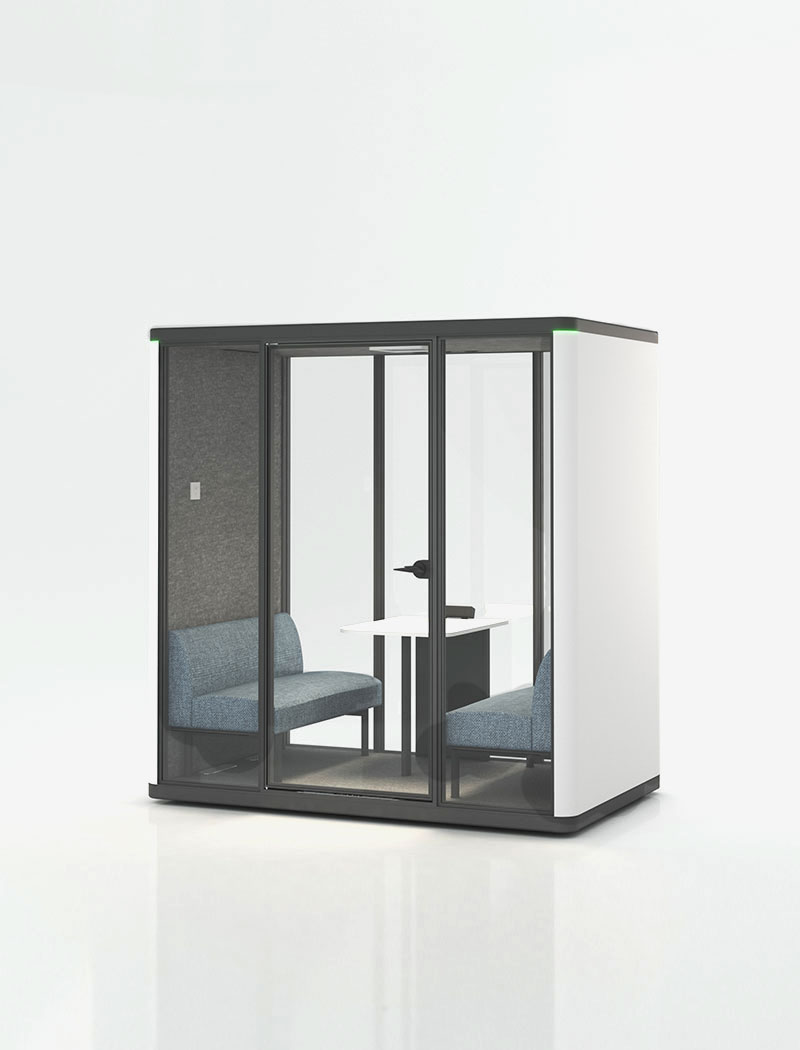
Consequently, focus pods, micro meeting pods, hybrid meeting rooms, open collaboration areas, hospitality negotiation zones, quiet work areas, and reconfigurable project spaces are becoming basic building blocks of the office. Steelcase's Ocular Frame and Ocular Shift showcased in 2026 integrate displays, cameras, and AV equipment into furniture systems—perfectly illustrating that hybrid work is no longer just adding video gear to a conference room, but designing space, furniture, technology, and user behavior together. Haworth's Gallerie workstation, DualCircuit power, and Moxie sofa system also reflect that boundaries between workstations, power supply systems, and lounge scenarios are gradually blurring.
Under this trend, furniture is no longer an isolated object, but part of the work infrastructure. Office desks, chairs, screens, power, lighting, acoustics, storage, and video equipment must jointly respond to human work rhythms. In the future, a good office will not be one space serving all tasks, but one where different tasks can rapidly find an appropriate scenario.
Acoustics, Lighting, and Sensory Design: Workplace Quality Enters a More Refined Competition
Another shift particularly worth noting at NeoCon 2026 is that lighting and acoustics have been upgraded from decoration details to spatial strategies. NeoCon officially established "Illuminate at NeoCon" this year, attracting over 60 lighting brands. This signifies that lighting is no longer a late-stage engineering accessory, but a critical condition affecting health, focus, ambiance, and spatial task switching.
The same applies to acoustics. Hybrid work has increased video conferencing, open offices have multiplied sources of distraction, and demands for focused work are higher than ever. When a space is overly noisy, lighting is harsh, or meeting sounds interfere with one another, even the most beautiful design struggles to be truly functional. In the future, when evaluating offices, enterprises will not merely ask if the space looks high-end; they will also ask whether employees can maintain focus, if meetings can be heard clearly, whether lighting supports long hours, and if different scenarios can switch effectively.
This signals that workplace design has reached a mature phase. Past offices often built a sense of professionalism through visual impressions; future offices must simultaneously manage acoustics, light, tactile feedback, materials, circulation, and psychological perceptions. Professionalism is not just looking neat, but properly supporting both the body and attention when people work inside.
Modularity and Sustainability Evidence: Office Furniture Enters Systemic Competition
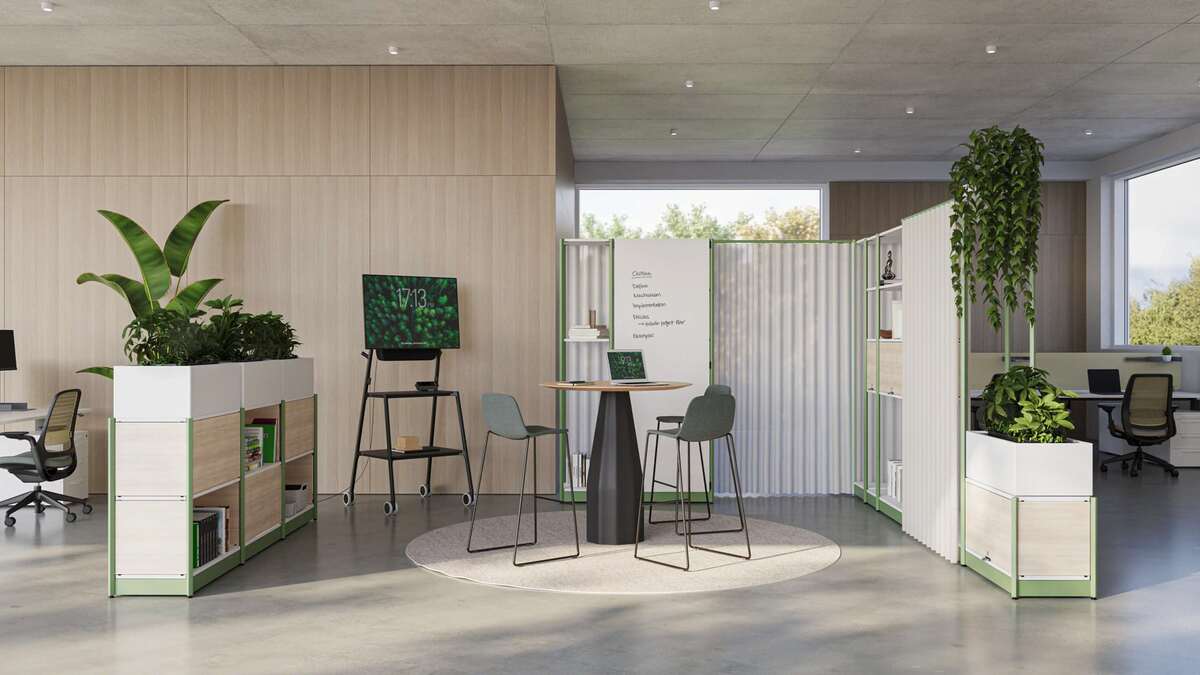 Hybrid work makes meeting space design place greater emphasis on equitable participation. Furniture, screens, cameras, and acoustic conditions must jointly support communication quality for both on-site and remote members. (Image Source: Steelcase Flex Collection)
At the furniture design level, modularity, systematization, reconfigurability, and extensibility have become the common language of this year's NeoCon. This is not just for ease of mobility, but because corporate organizations themselves change faster. Departmental reorganizations, project team formations, hybrid work arrangements, temporary workshops, and talent expansions or downsizings all demand that offices reserve room for adjustment. Fixed, one-time spatial planning is increasingly unable to support long-term corporate needs.
Sustainability has also moved from brand manifestos into product specifications. Sustainable offices in 2026 are no longer just about using eco-friendly materials or adding green vocabulary into copy; they are closer to a competition over product lifecycles and procurement evidence. Enterprises will ask about material origins, recycled content, repairability, disassemble-ability, service life, recycling mechanisms, and carbon footprint data. Herman Miller's update to Aeron is a case worth observing. This redesign is not just adding two new colors, Jasper and Nightfall, but redefining what a classic office chair means in contemporary work environments through material updates, structural reduction, and recycled content.
This case reminds the industry that sustainability cannot stop at image representation. Sustainable narratives accepted by enterprise buyers and designers in the future must return to concrete specs: how materials are selected, how structures are reduced, how products extend their lifespan, how maintenance is executed, and how retired pieces are processed. When this information can be stated clearly, sustainability shifts from a slogan into verifiable long-term value.
Implications for Taiwanese Enterprises: Upgrading Offices is Not Changing Furniture, but Resetting Work Conditions
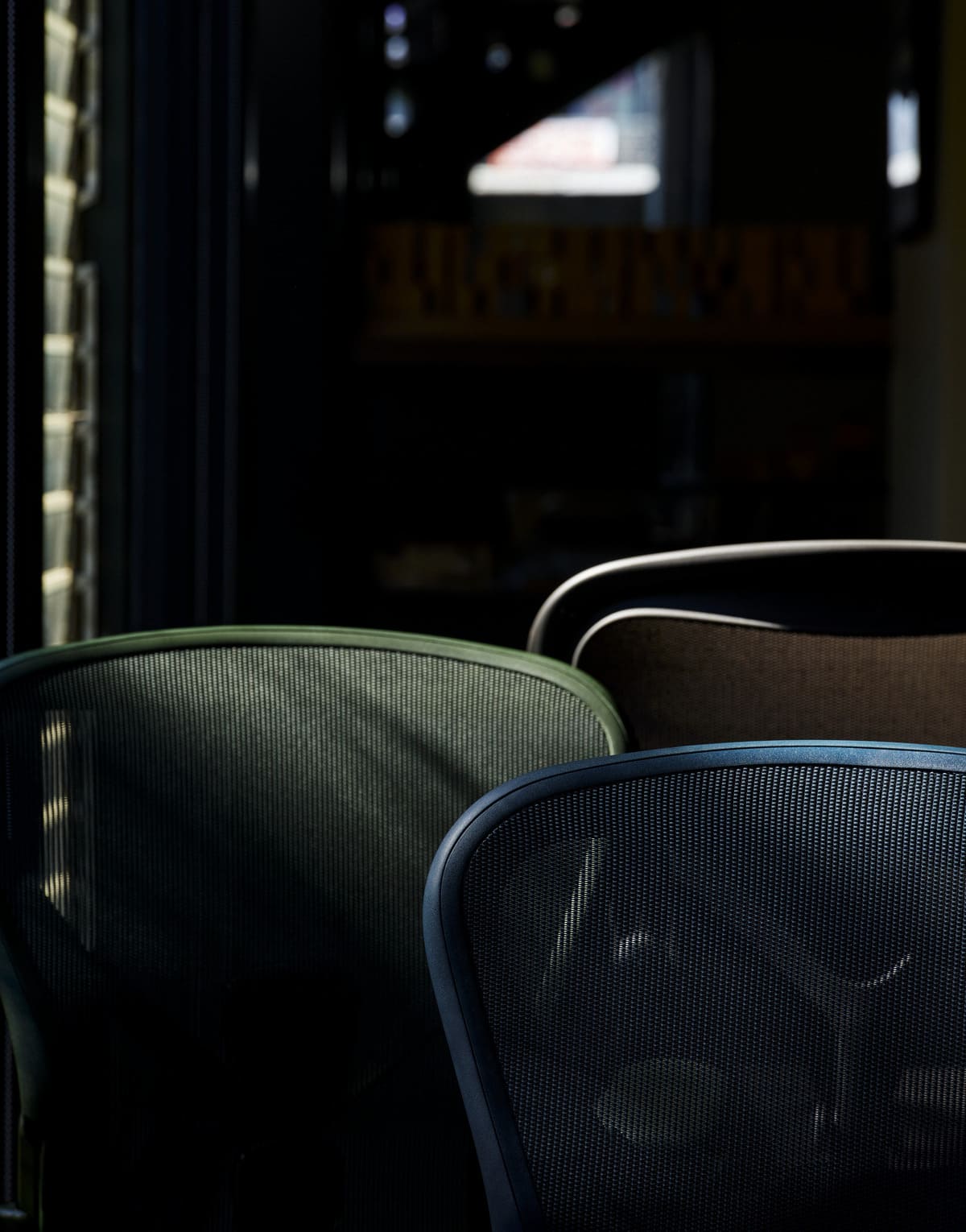 The value of future office furniture lies not only in appearance and comfort, but also in whether it can simultaneously respond to long-term demands for ergonomics, work states, spatial aesthetics, and sustainable procurement. (Image Source: Wallpaper/Herman Miller, Photography: Pippa Drummond, Courtesy of Herman Miller)
For Taiwanese enterprises, the true takeaway from NeoCon 2026 is not copying international brands' colors, forms, or booth styles, but re-understanding evaluation standards for office upgrades. An office is not just a renovation project or furniture procurement; it is becoming a critical interface for enterprises to attract talent, improve work efficiency, showcase brand height, and respond to ESG mandates.
Especially for technology, finance, professional services, manufacturing headquarters, and multinational corporations, offices shoulder more roles than ever. It is the reason employees choose to return on-site, the entryway for clients to perceive the brand, and the physical medium where corporate culture becomes visible. The key to the next stage of workplace upgrades is not "what furniture to buy," but what goals the enterprise hopes to accomplish through space: whether to boost cross-departmental collaboration, improve employee focus and health, support hybrid work, strengthen client reception experiences, or showcase sustainable procurement and corporate responsibility.
When problems are redefined, the value of space planning will be seen anew. Clear from NeoCon 2026, the future office is not just a container for work, but the live site of corporate capabilities. It impacts how people enter work states, how teams interact, how brands are perceived, and how enterprises respond to change. Truly leading workspaces are not just more beautiful, but better at supporting organizational operations; they are not just more comfortable, but enable people to engage stably, effectively, and willingly.
Trend Transformation | AURORA Furniture and AID: Assisting Enterprises in Demonstrating High-Value Capability Sites
AURORA Furniture and Aurora Interior Design (AID) have long paid close attention to healthy, efficient, smart, and sustainable workplaces. Through office furniture, spatial planning, and scenario-based solutions, they assist enterprises in translating work demands into executable work environments. Facing the global trends revealed by NeoCon 2026, if enterprises are pondering headquarters upgrades, hybrid work, employee experiences, or ESG procurement, the next step is not just choosing products, but redesigning the way work happens.