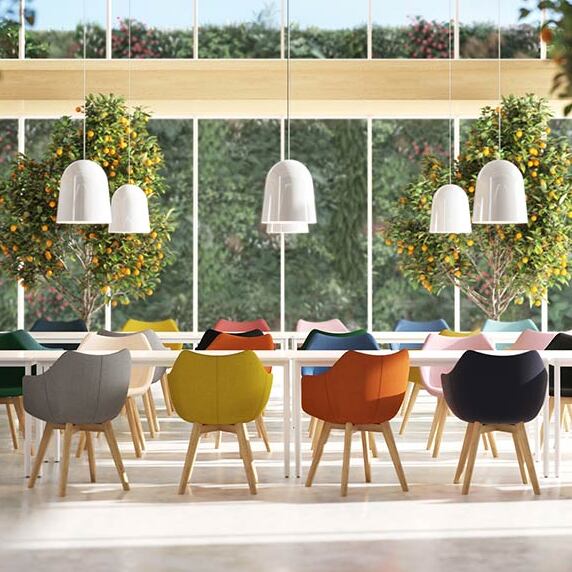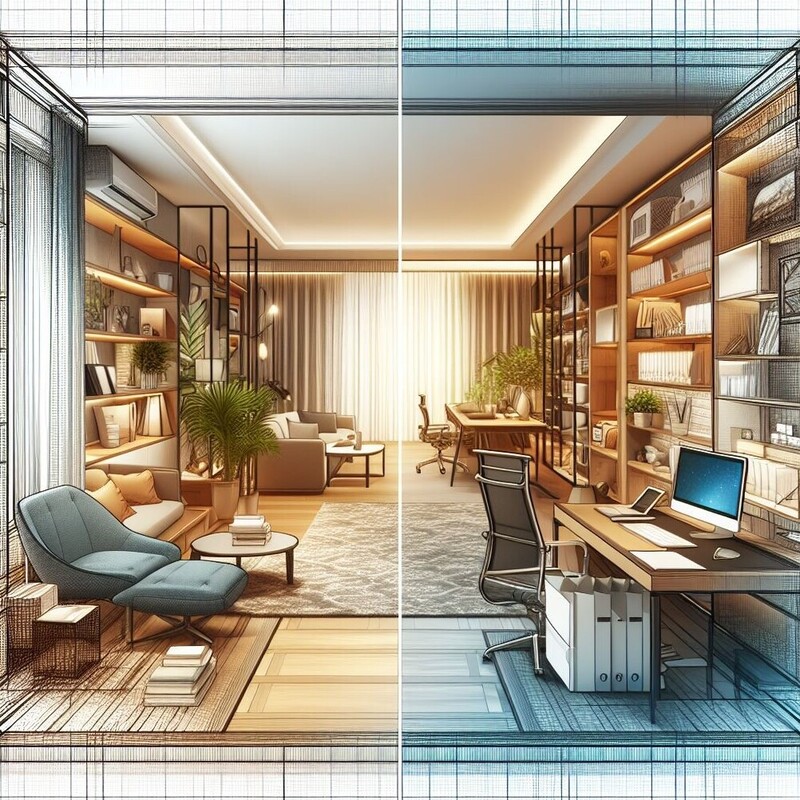
Diverse Work Modes Drive Spatial Evolution
The shift in work patterns has led to increasingly diverse professional modes. To support varied business needs and foster employee interaction, many enterprises are integrating multi-functional areas into their office designs.
Multi-functional office spaces provide the flexibility to support various activities, such as meetings, collaboration, reception, internal training, reading, relaxation, and celebrations. Improving floor area efficiency and achieving flexible utilization are the primary focus of future office design.
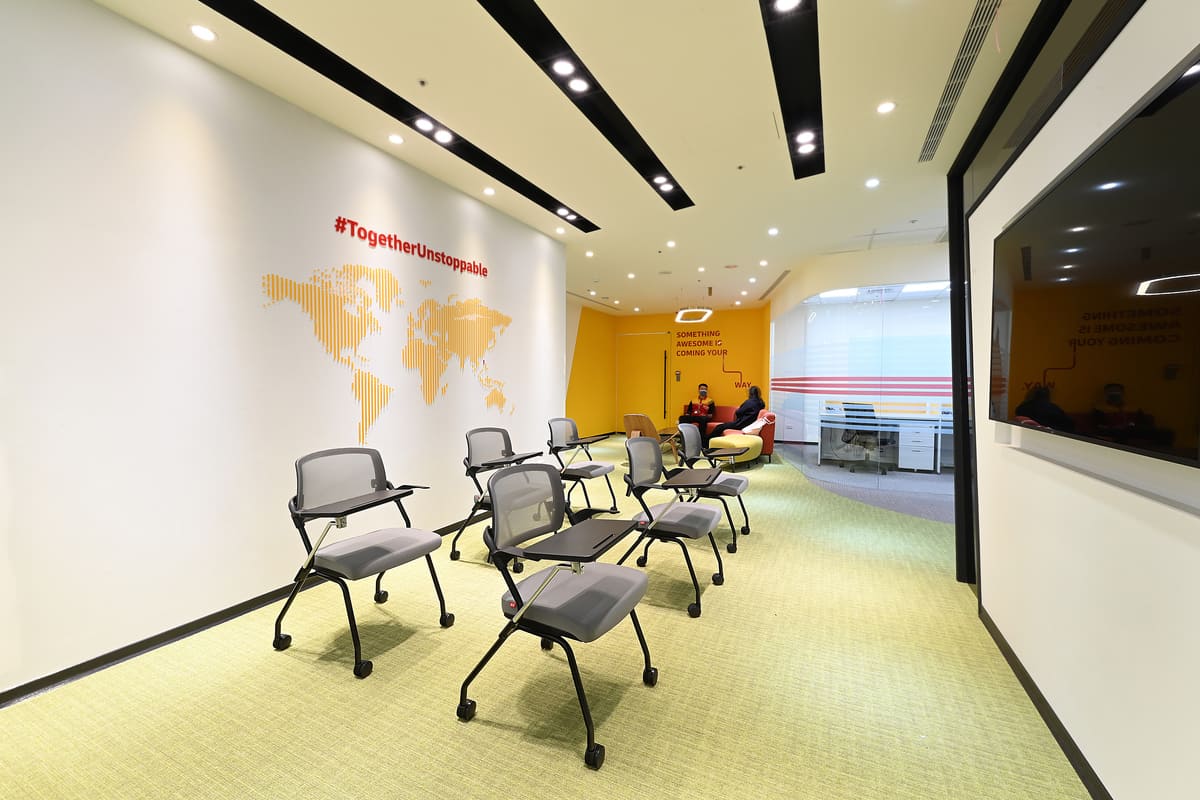 Multi-functional office area design enables flexible spatial use to satisfy various corporate activities.
Why Multi-functional Spaces are Gaining Popularity
Enhanced Efficiency & Flexibility:Spaces can be rapidly adjusted to meet various demands, allowing employees to dive into projects quickly.
Fostering Collaboration:Employees can choose environments based on their goals, unrestricted by fixed desks, facilitating spontaneous discussions and project collaboration.
Stimulating Creativity & Innovation:Breaking traditional modes with inspirational environments helps employees think outside the box and spark innovative ideas.
Improving Well-being:Diverse environments demonstrate respect for employee needs, thereby enhancing job satisfaction and well-being.
Space & Cost Savings:Reasonable design effectively maximizes spatial utilization and reduces facility costs.
How to Plan a Multi-functional Space?
Planning a multi-functional space isn't just about stacking equipment, which can lead to ineffective design. Enterprises must first understand the frequency and priority of their business activities to determine the ideal layout.
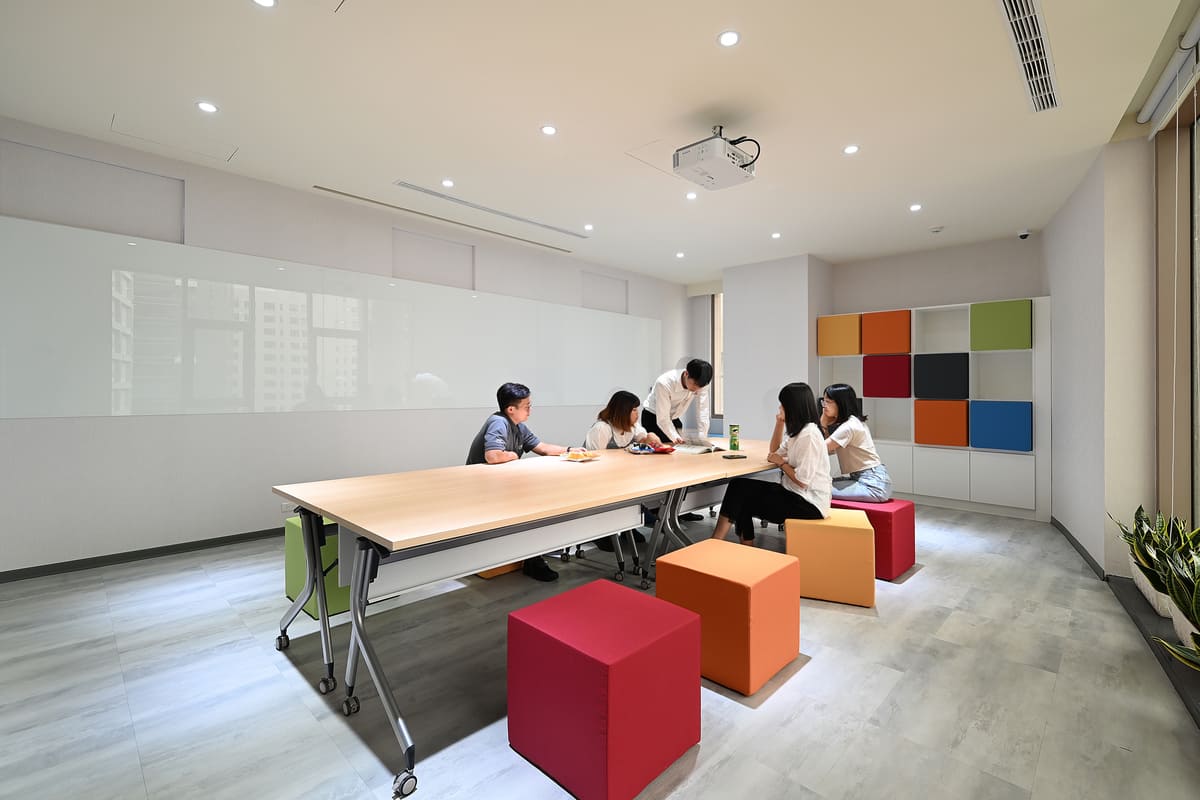 Caption: Multi-functional spaces better satisfy the diverse work needs of employees.
Business Goals & Requirements:Categorize spaces into Formal Meeting Areas (for conferences and training) and Relaxed Public Spaces (for guest reception, social activities, and celebrations). These two require distinct interior designs and hardware configurations.
Recommended Furniture:Choose flexible and mobile furniture for quick reconfiguration, such as tables and chairs on casters, nesting training tables, height-adjustable lounge tables, and soft sofas or coffee tables.
Using Mobile Partitions:Utilizing Modular Walls or Mobile Partitions allows for rapid layout adjustments, enabling multiple activities to occur simultaneously and maximizing spatial efficiency.
Spatial Design & Corporate Culture:As shared environments, these spaces reflect brand values and should remain consistent with corporate culture.
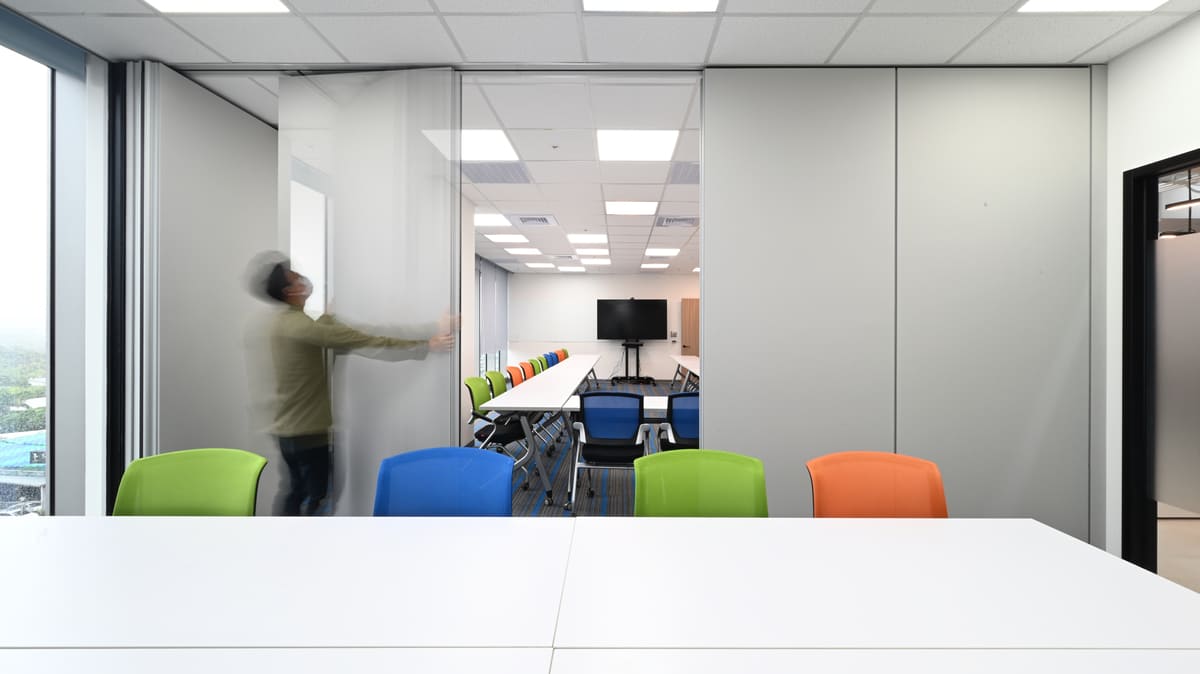
Building multi-functional spaces plays a crucial role in boosting efficiency, collaboration, and creativity. Beyond daily work, hosting workshops and courses opens diverse possibilities for the corporate team. As the pace of work accelerates, this flexible and multi-functional design model will remain a top priority.
※ Regarding spatial planning, healthy environments, or sustainable workplaces, AURORA Furniture offers professional consultation. Please leave a message below or call 0809-068-588 for dedicated assistance and planning proposals.