The office is being redefined
 (Image Source: Salone del Mobile.Milano)
Table of Contents:
- Trend Deconstruction | Workspace Moving from Product Procurement to Integrated Delivery
- Spatial Thinking | Under the Hybrid Work Wave, How to Reshape Employee and Sustainability Retention through "Scenario Configuration"
- Trend Implementation | AURORA Furniture x AID: Transforming Global Trends into a Corporate "Value Engine"
In the past, when enterprises planned office space design, their focus was on square footage, seat counts, departmental layout, and office furniture procurement. However, in the global design context of 2026, the workspace is no longer just a place to hold work, but a comprehensive manifestation of corporate culture, talent strategy, collaboration efficiency, brand image, and sustainability commitments. As revealed by the trends at the 2026 Milan Furniture Fair (Salone del Mobile.Milano), the international design industry is rapidly moving from "individual furniture pieces" toward "total space solutions." Office furniture is no longer merely a combination of desks, chairs, and cabinets, but a systemic design that responds to work modes, organizational behavior, and corporate values. This also means that future office competition is not just about whose furniture is more aesthetically pleasing or whose materials are more premium, but about who can assist enterprises in facing a fast-changing business environment with a more complete spatial strategy.
01 / From Individual Furniture to Contract Solutions: The Workspace Enters the Era of Integrated Delivery
One of the most noteworthy signals from the 2026 Milan Furniture Fair is the high level of attention given to the Contract sector. This signifies that the competitive core of the global furniture and interior design industry has gradually shifted from "product display" to "spatial delivery."
For enterprises, office renovation is no longer just about purchasing a few office desks and chairs that fit the budget, but rather about addressing the following five major questions:
1. Can this space support hybrid work?
2. Does it enhance cross-departmental collaboration?
3. Does it contribute to talent recruitment and retention?
4. Can it demonstrate the enterprise's ESG actions?
5. Does it make customers, partners, and employees more willing to enter this space?
Therefore, the planning of future workspaces will closely resemble a type of "corporate operational infrastructure." It requires the integration of furniture, interior design, acoustics, lighting, technological equipment, circulation, brand identity, and sustainable materials. Space is no longer something to be used only after renovation is complete; rather, it must align with the enterprise's workflows, management modes, and organizational goals during the initial planning stages. This also explains why brands capable of providing comprehensive planning, integrated design, and project delivery capabilities will possess higher value in the next phase of the market.
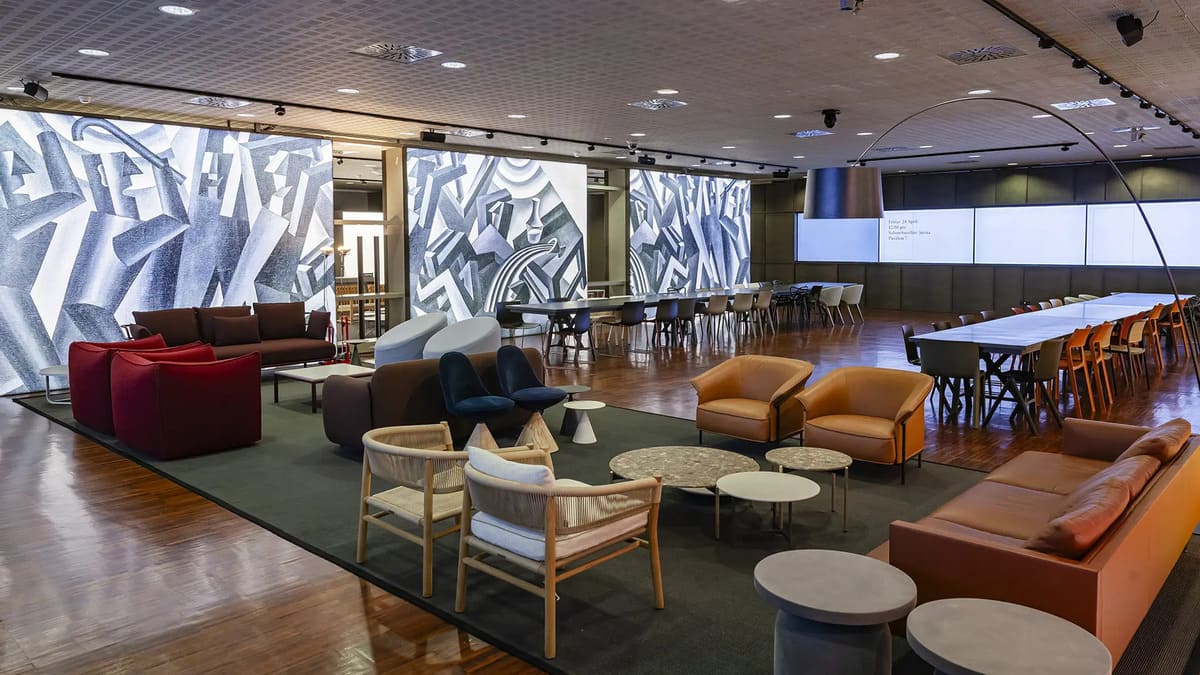 Red Lounge: The core space for interpersonal exchange and relationship connection at the Salone del Mobile.Milano. Conceived and created by designer and architect Piero Lissoni, this space can be viewed as a spatial manifesto of contemporary elegance and functionality. | Image Source: Salone del Mobile.Milano
02 / After Hybrid Work, the Office Must Become a Destination "Worth Visiting"
Hybrid work has evolved from a short-term contingency into a long-term system. When employees no longer come to the office fixedly every day, enterprises need to think deeper: Why should people come to the office? The answer will not simply be "because of company regulations," but that the office must provide values that working from home cannot replace. These include better collaboration efficiency, higher quality meeting experiences, deeper team connections, a more complete sense of brand culture, and a work environment that better supports physical and mental well-being. Consequently, the future office will gradually shift from "seating configuration" to "scenario configuration." What enterprises need is not just an open work area, but a complete portfolio of focused work zones, short-term discussion areas, hybrid meeting rooms, project war rooms, relaxation lounges, brand exhibition spaces, and talent reception areas.
In other words, the value of an office is no longer determined by how many people it can hold, but by whether it allows different tasks to happen in the right space. Focus requires quiet, collaboration requires flexibility, creativity requires interaction, decision-making requires efficiency, and a brand needs to be seen and felt.
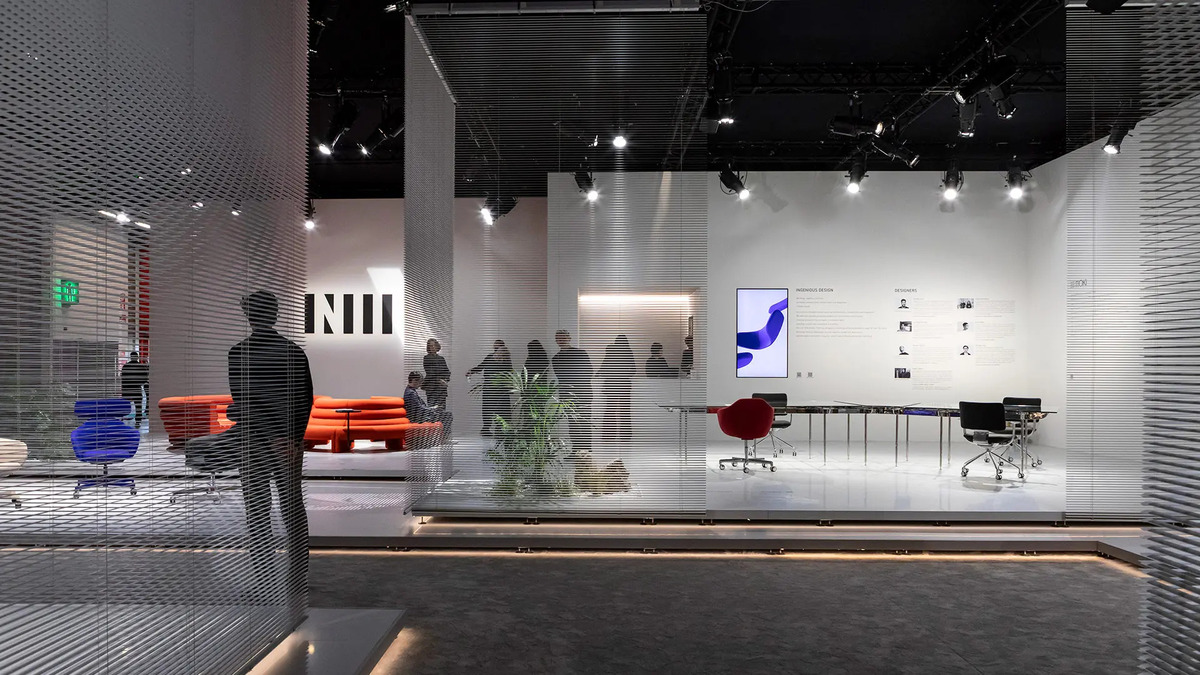 Workspace solutions are gradually breaking away from existing conventions and traditional frameworks, turning instead to embrace the experiential application of colors, materials, and flexible systems to create a more delightful and sensory-layered spatial experience. | Image Source: NII, 64th edition of Salone del Mobile.Milano
03 / Modularity and Flexible Configuration: Becoming Spatial Resilience for Enterprises Facing Change
In a rapidly changing industrial environment, fixed and one-time spatial planning is increasingly difficult to satisfy corporate needs. Whether it is departmental reorganization, the establishment of project-based teams, hybrid work arrangements, or corporate expansion and downsizing, offices are required to possess higher adjustability. Therefore, modular furniture and multi-functional design have become critical trends in 2026. The value of modularity is not just about "ease of movement," but about allowing the space to retain the capability for reconfiguration. Meeting areas can be quickly converted into workshop spaces, open areas can adjust according to team scale, and seating, desk sets, and screens can be recombined based on usage needs. This flexibility ensures the office is no longer a static floor layout, but a work system that can continuously evolve with the organization's rhythm.
For enterprises, this represents a form of spatial resilience. The faster the market changes, the more workspaces need to retain room for adjustment. Good office design does not just solve current problems; it reserves possibilities for future changes.
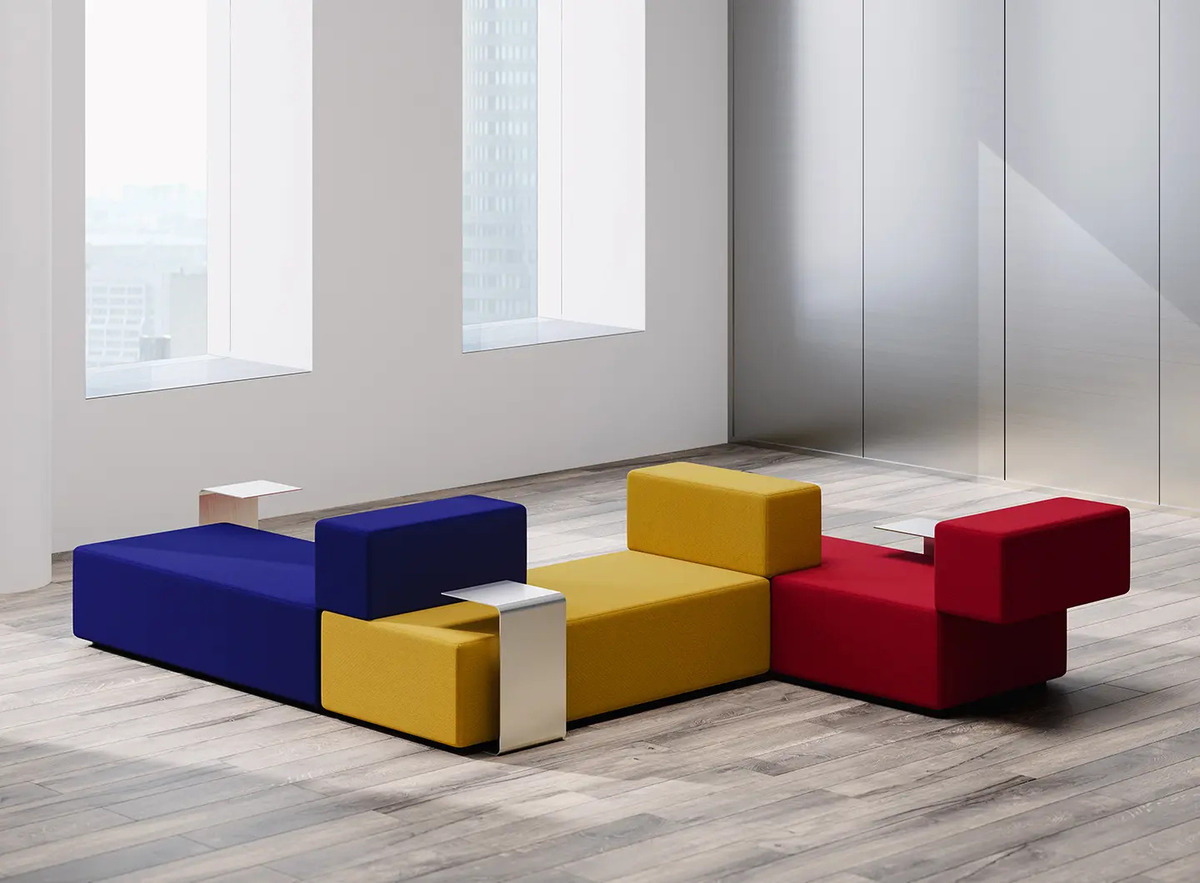 Todd Bracher, BITMAP: Centering on a single module, two geometric rectangular solids are precisely fused along their edges, allowing the smaller mass to present a near-levitating visual tension, demonstrating structural aesthetics under minimalism. | Image Source: Salone del Mobile.Milano/stories
04 / Health and Focus: Becoming the Essential Foundation for High-Performance Work
In the past, when discussing office efficiency, the focus was often on processes, systems, and management. However, recent global workplace trends have clearly pointed out that a person's physical and mental state is the fundamental condition for work performance. Ergonomic seating, sit-to-stand workstations, good acoustic environments, proper lighting design, air quality, circulation planning, and psychological safety all affect employees' focus, fatigue levels, and job satisfaction. Especially in scenarios where hybrid work and high-density collaboration coexist, the office needs to provide multi-layered work support: some people need open communication, while others require short-term deep focus; some need high-quality video conferences, while others need quiet to process complex information. Future healthy workplaces are not just about providing a comfortable chair, but about establishing a complete human-centered environment encompassing bodily support, acoustic control, visual comfort, psychological stability, and work rhythm.
This is exactly why "comfortable seating,""quiet spaces,"and"focus zones" continue to receive significant attention at international design exhibitions. Because true high efficiency does not come from keeping people constantly tense, but from allowing them to maintain a stable, clear, and sustainable working state within an appropriate space.
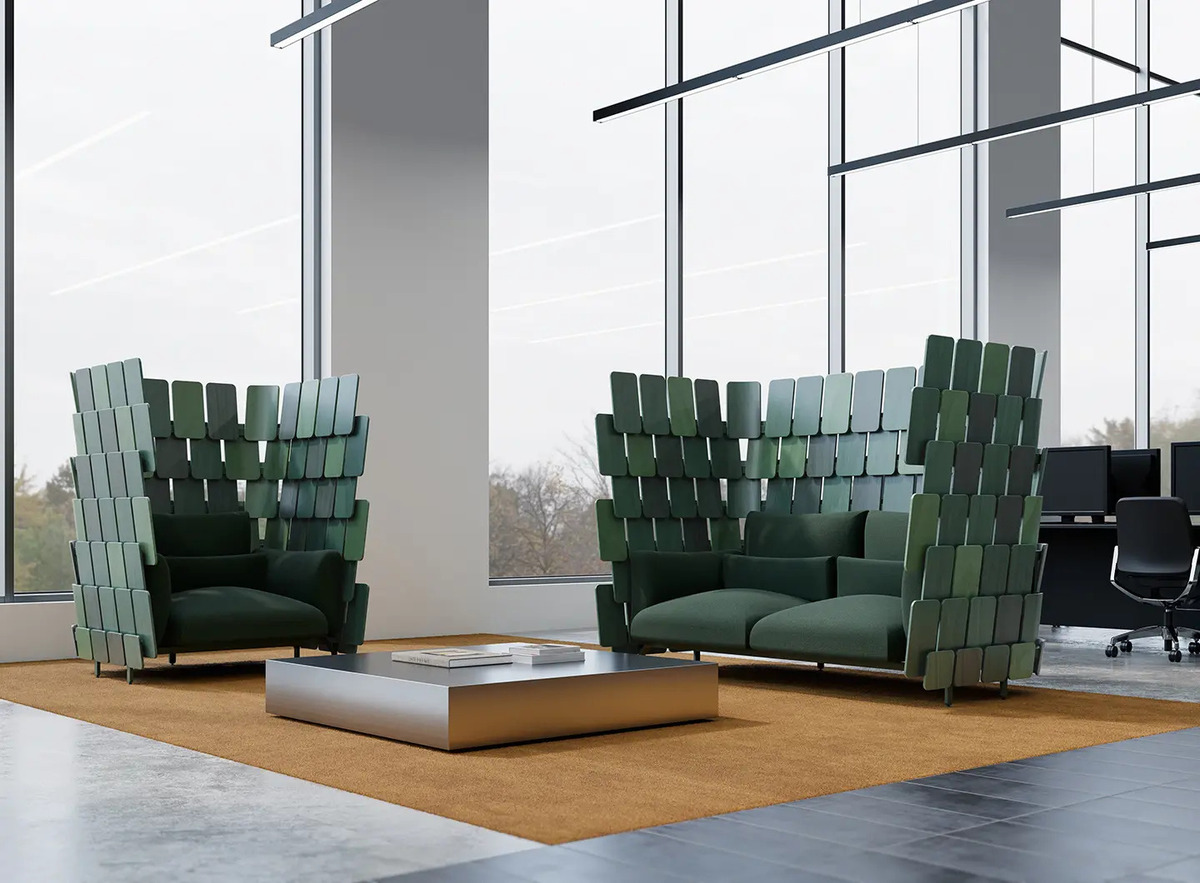 Michele De Lucchi, PIGNA: A modular system combining screens and seating that reinterprets the structural vocabulary of wooden shingles. Its panels filter light and air, creating a warm and pleasant micro-architectural space that provides a sense of shelter without causing isolation. | Image Source: Salone del Mobile.Milano/stories
05 / Sustainable Materials and Circular Design: Moving from Image Appeal to Corporate Responsibility
Sustainability is no longer an added value, but a baseline requirement for future workspaces. The sustainable trends presented at the 2026 Milan Furniture Fair do not stop at using eco-friendly materials or reducing carbon emissions, but return to a full lifecycle approach for products and spaces: Where do materials come from? Can they be disassembled? Can they be repaired? Can they be recycled and reused? Can their service life be extended? Can one-time waste be reduced? This triggers a shift in the value judgment of furniture and interior design. In the past, enterprises often based procurement on price, appearance, and delivery time; in the future, durability, repairability, replaceability, material transparency, and circular reuse capabilities will become vital evaluation criteria.
For corporate headquarters, R&D centers, and large-scale office spaces, sustainable design will also link with ESG disclosures, brand image, and supply chain responsibilities. The office is not just an internal work arena, but will become a concrete proof of the enterprise's demonstration of sustainability commitments to employees, customers, investors, and society.
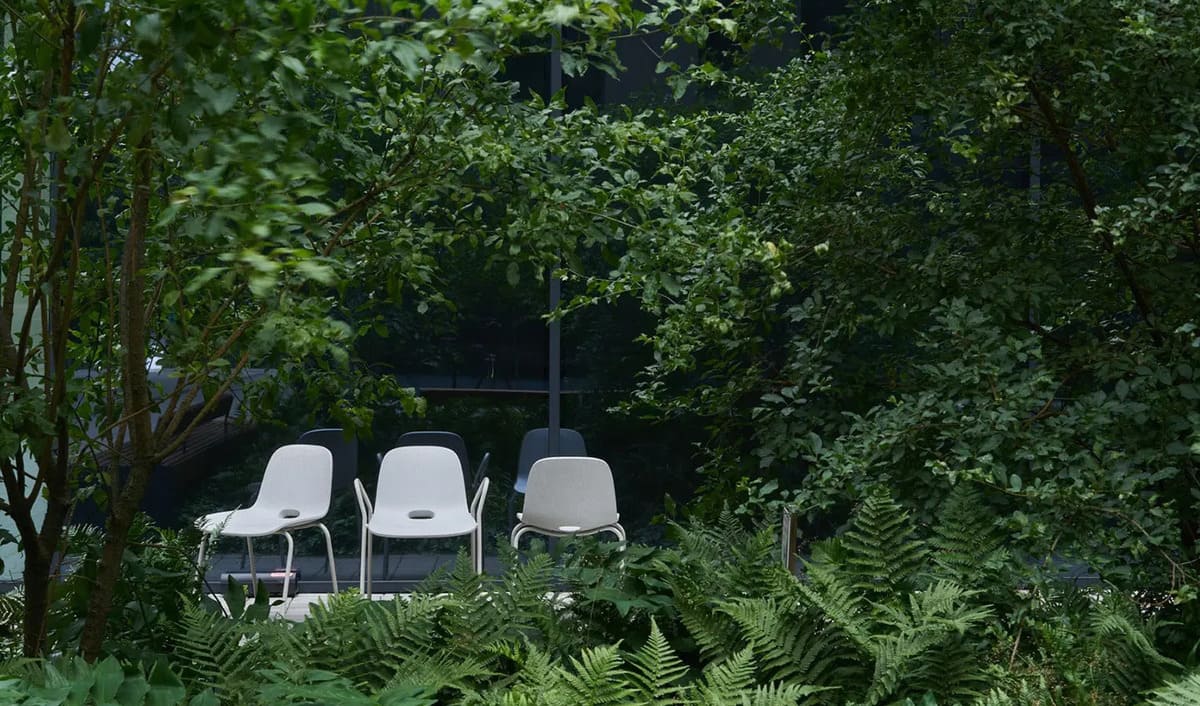 ALLin, LOOPE: The core concept centers on a circular economy system, where each product is made from recyclable materials and can be returned to the manufacturer after years of use. | Image Source: Salone del Mobile.Milano/stories : photo by Grzegors Wijata
06 / Materiality and Sensory Experience: Redefining the Professional Texture of Workspace
Another trend worthy of attention is that the importance of materiality is gradually surpassing mere color. The design of future workspaces will not just pursue bright, neat, or formulaic corporate feelings, but will place greater emphasis on touch, light and shadow, texture, temperature, and emotion. Wood, fabrics, metals, stones, matte surfaces, low-saturation tones, and natural textures will together shape a more mature, stable, and brand-recognizable spatial atmosphere. This trend reflects people's counter-demand against "high-pressure digital work." As work relies increasingly on screens, data, and instant responses, people need a physical environment that can reduce distractions, soothe the senses, and enhance a sense of belonging.
Therefore, future workspaces will not just involve functional planning, but represent a type of experience design. It must make people feel professional yet comfortable, allowing them to see the height of the enterprise while feeling the warmth of daily work.
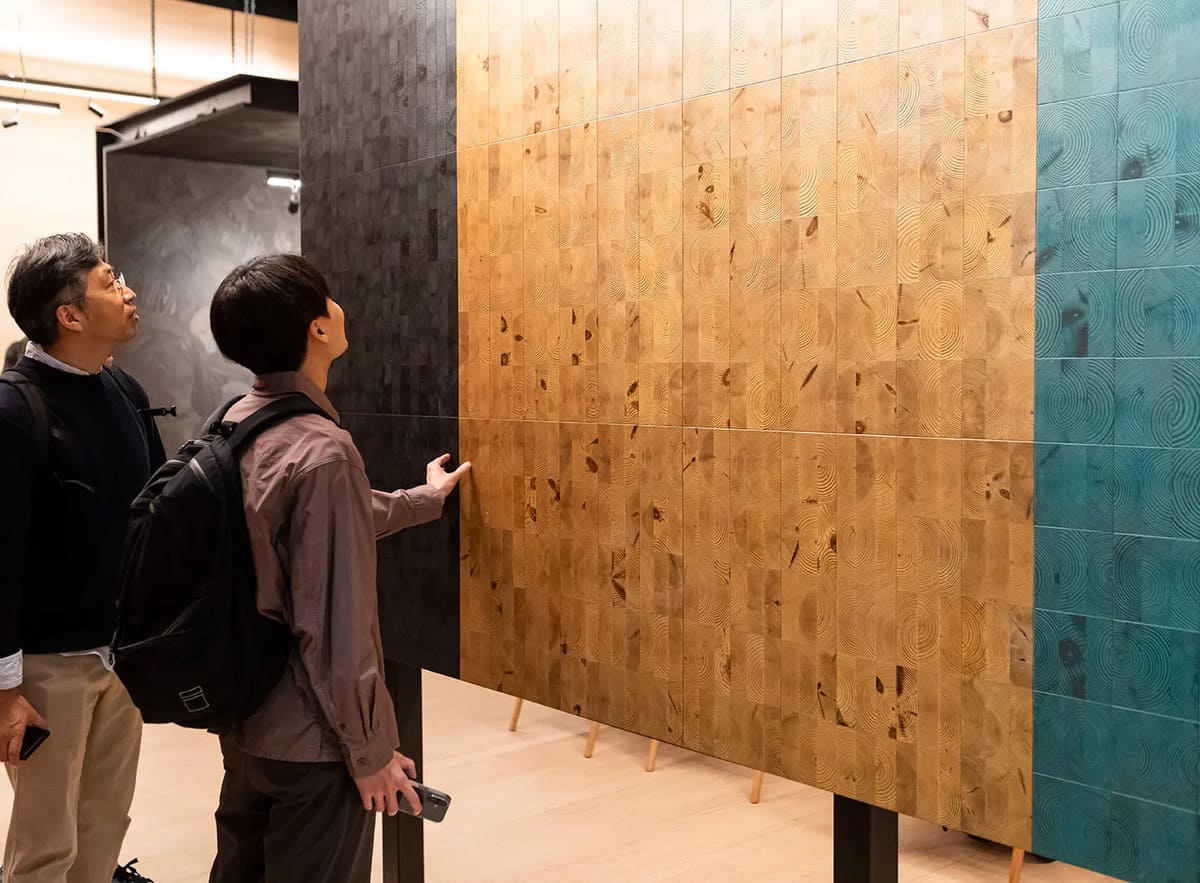 Listone Giordano: Inspired by a configurational order sparked by stellar and optical physics. This wooden flooring module features concave and convex edges as its main characteristics, which can interconnect precisely to form highly decorative patterns. The reflection effects generated on the wood surface under light bestow an unexpected visual layer with iridescent changes. | Image Source: Salone del Mobile.Milano/stories :
From Global Trends to the Taiwan Office Market: The Key to Corporate Upgrading is Not Just "Changing Furniture"
For Taiwanese enterprises, upgrading workspaces in 2026 should not be viewed merely as a renovation or procurement project, but as part of corporate business strategy. Especially across technology, finance, professional services, manufacturing headquarters, and multinational corporations, the office has gradually assumed more roles: it is a showcase for talent recruitment, a carrier of corporate culture, a platform for cross-departmental collaboration, and a physical interface for ESG and brand image. Therefore, the key to the next stage of workplace upgrades is not "what furniture to buy,"but"what goals the enterprise hopes to accomplish through the space."
Is it to enhance collaboration efficiency? Improve employee focus and health? Support hybrid work? Demonstrate sustainability commitments? Strengthen the client reception experience? Or make the headquarters a concrete manifestation of brand spirit?
"When problems are redefined, the value of space planning will be seen anew."
AURORA Furniture and Aurora Interior Design: Responding to Future Workplace Trends with Integrated Capabilities
Facing the trend where global workspaces move from individual furniture pieces to total solutions, the value that AURORA Furniture and Aurora Interior Design can provide is not just product selection, but integrated thinking that spans office furniture, space planning, healthy workplaces, smart applications, and sustainable design.
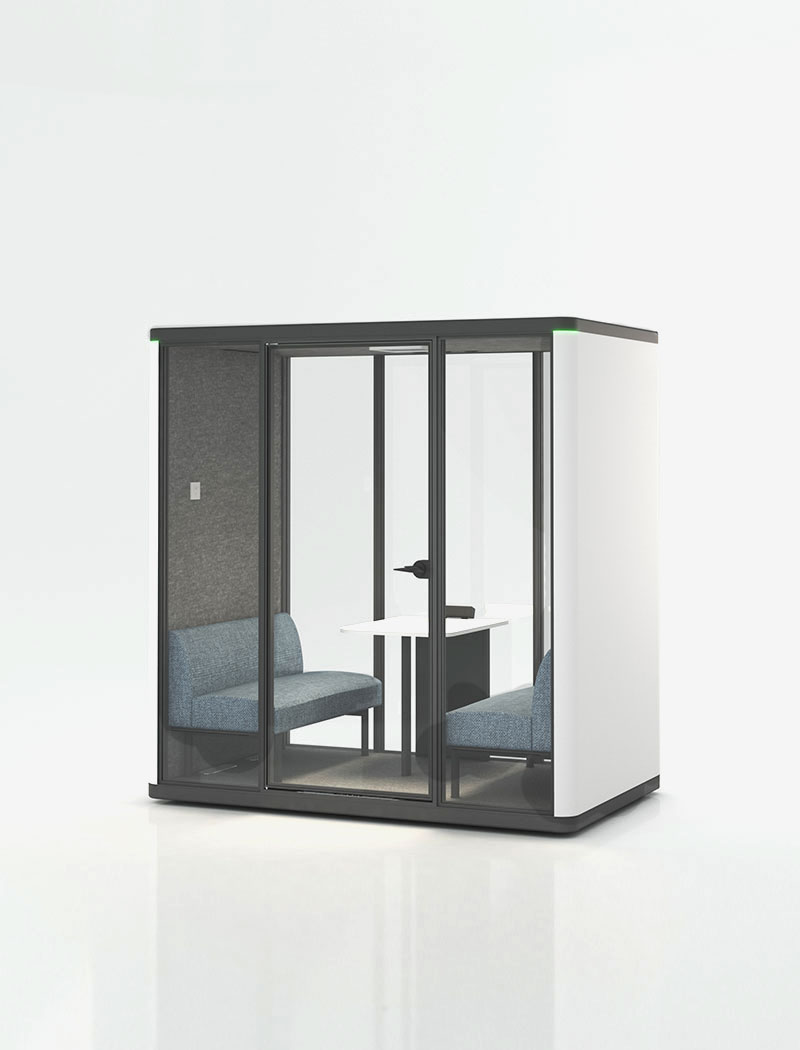
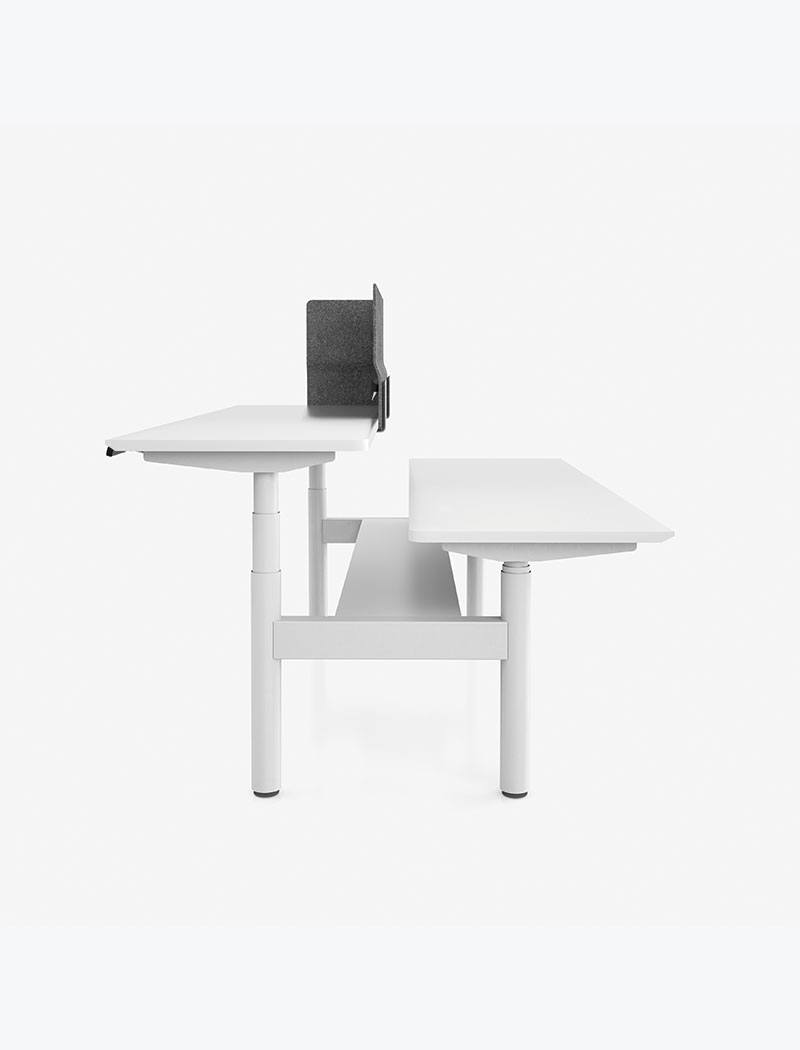
For example, facing flexible and hybrid work needs, enterprises can establish a more mobile workplace through modular furniture, height-adjustable desks, silent pods, and diverse meeting configurations. Facing health and focus needs, they can approach from ergonomic seating, sit-to-stand workstations, acoustic spaces, and lounge areas. Facing ESG and circular economy trends, they can further consider material selection, furniture lifecycles, maintenance services, recycling reuse, and new models like furniture leasing instead of purchasing. Furthermore, Aurora Interior Design's expertise in interior planning, renovation integration, and brand space shaping can assist enterprises in integrating furniture, space, circulation, materials, and corporate image into a consistent workplace experience.
This is precisely the capability most required for future workspaces: not solving problems partially, but adopting an integrated perspective to assist enterprises in building work environments that can adapt to change, support talent, showcase brands, and practice sustainability.
The Future Office is More Than a Place to Work; It is the On-site Frontier of Corporate Value
From the 2026 Milan Design Week to the Taiwan corporate office market, a common direction can be clearly seen: workspaces are turning from a "cost item" into a "value engine."
It influences how employees collaborate, how customers perceive the brand, how enterprises demonstrate sustainability commitments, and how organizations face future changes. Truly leading workspaces do not just look more beautiful; they make work more efficient, make people more willing to engage, make brands more persuasive, and allow enterprises to maintain the capability to move forward continuously in a fast-changing era.
The future office is not just a place to work. It will be the place where corporate culture is seen, where talent is willing to stay, where innovation is activated, and where corporate value truly happens.
※ For workspace planning, efficient office proposals, or office space solutions, AURORA Furniture offers consultation and planning schemes. Please leave a message on the board below or call our customer service hotline at 0809-068-588 for dedicated assistance.